
What is Existentialism?
An Introduction

Why get up from bed? Why study, work, experiment? We spend our lives succeeding, failing, choosing, acting, and attempting to give life purpose…what is the meaning of it all? Are we defined by our facticity, products of an omnipotent being, or are we perhaps thrown into the world and condemned to be free?
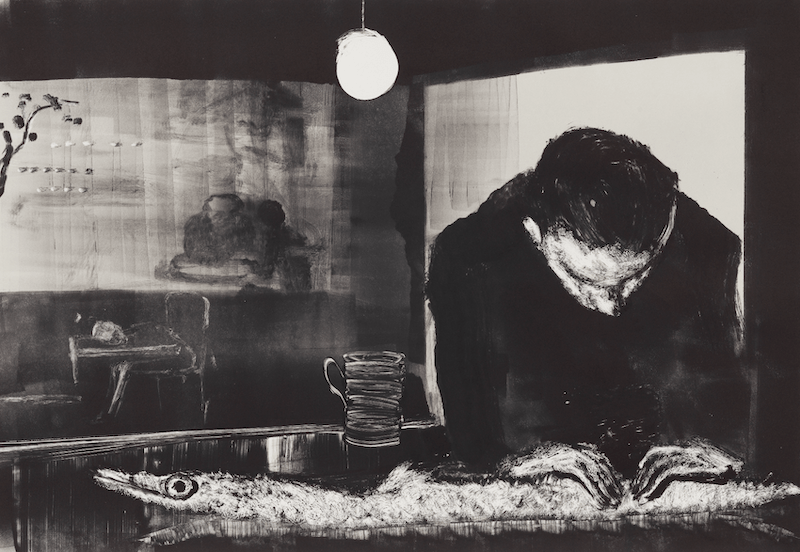
We’ve all experienced, to at least a certain extent, feelings of anxiety, angst, and uncertainty. Either from an insatiable desire to express oneself authentically or by a sensation of ‘wanting to’ yet simultaneously feeling constrained. By constraints I mean those seemingly immovable objects and circumstances that are presented and received as absolutes —whether it be socio-economic factors such as poverty and lack of opportunity, or a deep-rooted feeling of indecision and unpredictability–life remains ambiguous. Existentialism, which proposes a vantage point to confront this dilemma is characterized as both a social and inter-personal reflective relationship. Positing the individual in a place of action, existentialism attempts to liberate man from a seemingly endless gaze into the abyss—a purgatory of choice. Conveyed in cinema, pop culture, literature, and art existentialism is commonly retold in Hollywood hits such as Lost in Translation, The Lobster, The Truman Show, and Stanley Kubrick’s 2001: A Space Odyssey, amongst many others. In this sense, existentialism captivates and intrigues the mind due to its universal applicability. In short, existentialism operates in the medium of creating personal meaning. Reaching into the very ambiguities of life, it positions man to not shy away but rather embrace freedom—to grasp and impose oneself on a predetermined world.
Existentialism Defined
Put simply, existentialism is a philosophical viewpoint that posits man as a primary figure in the world. It emphasizes on one's ability to choose, act, and self-actualize freely and authentically–one must invent themselves. ‘Create your path’, shouts the existentialist firmly entrenched in the inventive corner of your soul. Existentialism speaks to that unquenchable thirst for self-expression that humans so desperately crave yet in unison negate. Often, we are tainted by our facticity, i.e., what is given and predetermined–height, class, religion, race, family, etc–but the existentialist must recognize and transcend such obstacles.
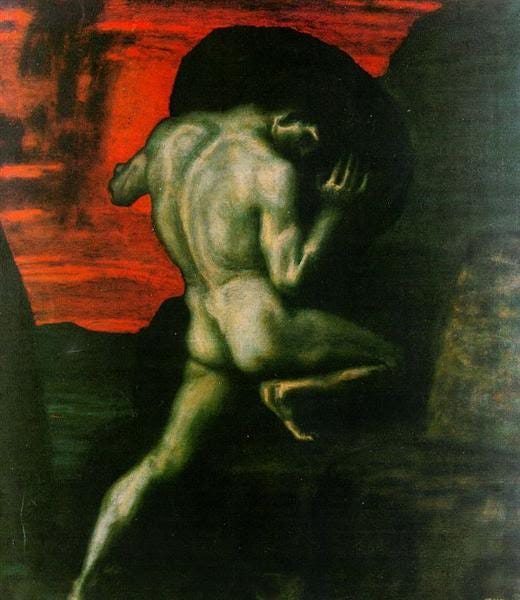
In other words, existentialism recognizes that one must create oneself authentically and that one is the primary source of value. Still, at the same time, one must comprehend the gravity of pre-established circumstances. This is what French philosopher Simone De Beauvoir means when stating that existentialism positions “the value of the individual as the source and reason for being of all significations and all colors, yet it admits that the individual has reality only through his engagement in the world.”[1] Existentialism thus posits, although a philosophy interpreted as a practice of individual salvation, that one must exercise their will under the guise of universal freedom. Mainly, through a posture against oppression. This is what Jean-Paul Sartre had in mind when expressing that ‘in choosing myself, I choose man’[2] and echoing Sartre, De Beauvoir asserts ‘the will of free being is sufficient for the accomplishment of freedom, yet–this will can posit itself only by struggling against the obstacles and the oppressions that limit the concrete possibilities of man.’[3]
A Brief History
Existentialism has its origins in a interplay of philosophical, religious, and social developments across history. Early inklings of existential thought can be found in ancient philosophies like Stoicism and Epicureanism, as well as in the introspective works of Augustine, Montaigne, and Pascal. However, it wasn't until the nineteenth century that existentialism solidified into a significant intellectual movement. This period saw the emergence of a secular and scientific worldview that eroded traditional religious frameworks, leaving individuals adrift and isolated. This is partly what Nietzsche warned when stating ‘God is dead and we have killed him.’ Protestantism's emphasis on individualism further exacerbated these feelings of disconnection from communal bonds.
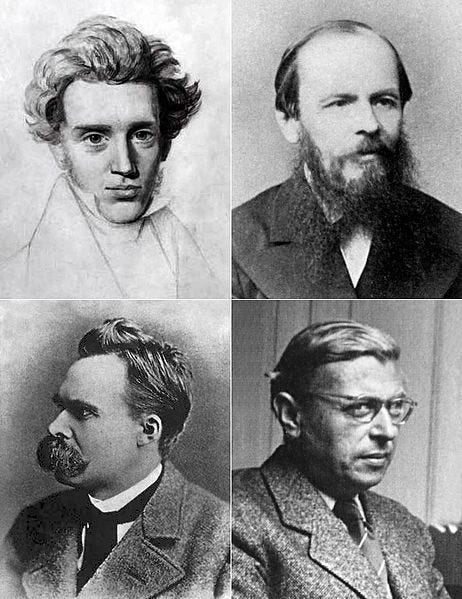
The Industrial Revolution and the rise of modern states further compounded this existential crisis by creating impersonal and alienating social structures. Existentialist thinkers like Kierkegaard, Nietzsche, Heidegger, and Sartre critiqued the conformity and emptiness of mass society, while literary figures such as Dostoevsky, Camus, and Kafka depicted the existential angst of individuals within bureaucratic systems.
These social upheavals laid the groundwork for nihilism, where humanity grappled with the absence of inherent meaning or purpose in existence. Marking the loss of traditional moral absolutes and the subsequent existential void. In response, existentialism posed urgent questions about the nature of existence, challenging conventional philosophical frameworks to confront the absurdity of human existence head-on.
Key existentialist thinkers like Kierkegaard explored the limitations of human existence in relation to God, while Nietzsche introduced the concept of the will-to-power and the idea of the ‘overman’ (Übermensch). Sartre and De Beauvoir further developed existentialism by rejecting the notion of God and proposing an ‘atheistic existentialism’, emphasizing human responsibility in creating meaning.
Why Existentialism
A main tenet of the criticisms directed at existentialism is one of pessimism and nihilism. In short, critics accuse the existentialist doctrine of breeding feelings of hopelessness and abandonment in what Nietzsche coined a ‘godless world’. Essentially, in ones turning away from God and his ethics, the gaze into the abyss will ultimately result in nothing but deep-rooted forlornness. The existentialist pushes back on such criticisms based on self-creation and by suggesting that the project of invention holds intrinsic value. In other words, the attempt at imposing oneself authentically onto the world is a good and an end in itself. Thus, values and ethical principles must be authoritatively endorsed not by ‘eternal and superterrestrial laws but as the search for a valid foundation of human history.’[4] Namely, man's principle project is the very act of creating new values rooted in both oneself and universal freedom. The existentialist rejects the claim of nihilism because from this very gaze into absurdity, and the refusal to embrace ‘ready-made’ values, one will give the world new meaning and ‘constitute a kingdom of ends.’[5]
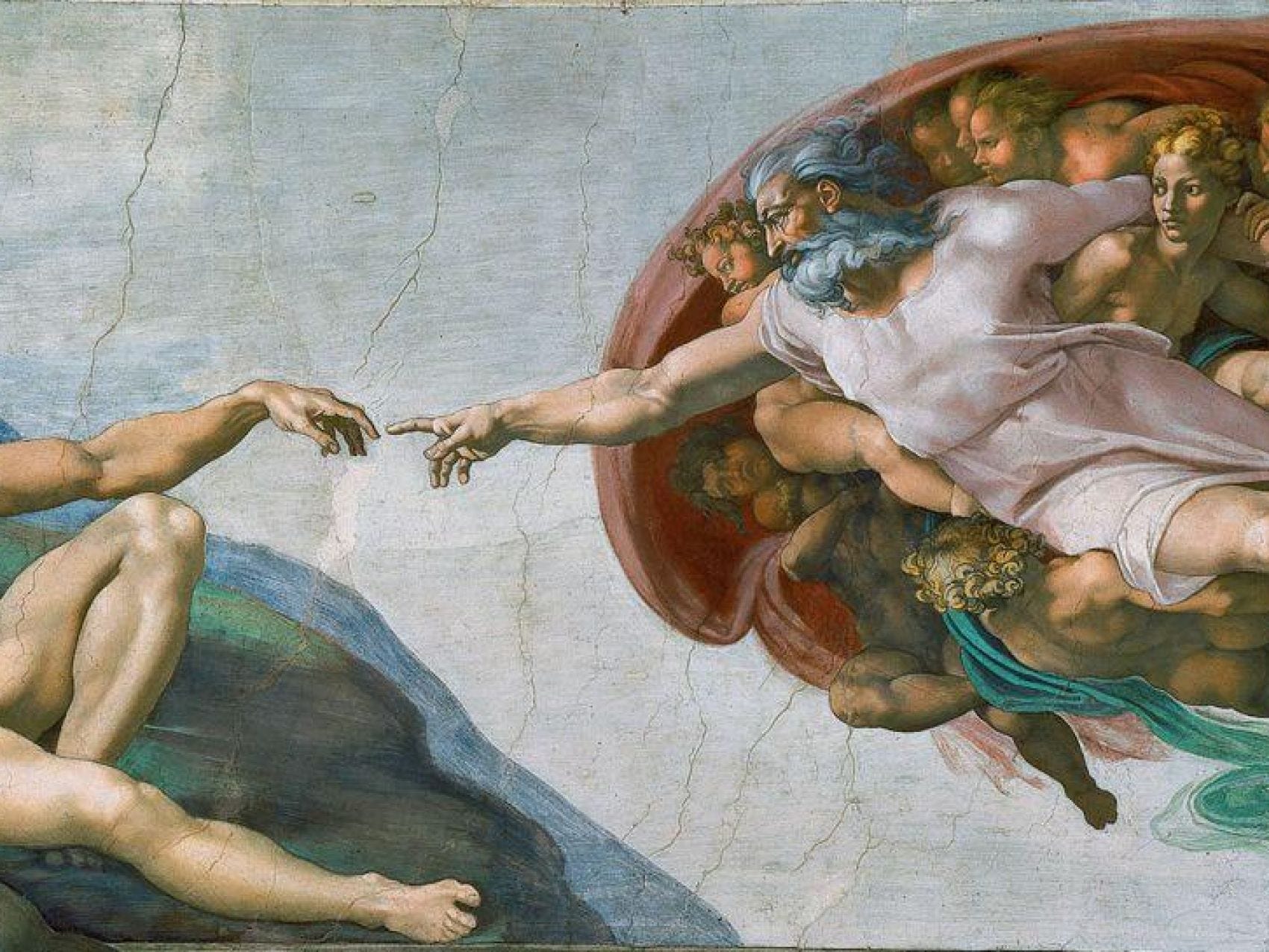
Following the existentialist ethos of creation, and to finalize my discussion on existentialism, I’d like to highlight Jean-Paul Sartre’s paper cutter metaphor which highlights the thesis that existence precedes essence. The paper-cutter, to use as a primary example, is firstly conceptualized (via its function and future use) and then manufactured. In other words, it is a product given meaning by its producer and is brought into existence through a technical view of the world–its essence precedes its existence. Unlike the paper-cutter, both Beauvoir and Sartre contend that existentialism believes that one is thrown into the world, indicating that one firstly exists and is not pre-defined. Consequently, one must thus establish and create their essence by imposing oneself onto the world and inventing–’man is nothing but what he makes of himself.’[6] Man's existence is primary, his essence secondary.
This thesis (existence precedes essence) was mainly directed at Christians, creationism, and the disciples of the story of Genesis. For them, humans are created, like the paper-cutter, under the domain of an all-knowing, omnipotent entity they call God. When we hold God as the creator, as many do, we are essentially positioning ourselves as pre-defined beings conceptualized and designed through the eyes of a supreme entity; we are disclosing and betraying both our potential and our freedom.
Existentialism is thus a philosophy that promotes both individual and social flourishment through the recognition of one’s ability to choose and act. A doctrine that confronts the ambiguities and contradictions of self and society, that transcends anxiety and the absurd, and one that embraces man as a self-actualizing project. To conclude my commentary on existentialism, I’d suggest the reader to reflect on the futility of life devoid of authenticity.
Stop, think, contemplate, overcome, and act! Do not let yourself be spoon-fed ready-made values, I shout from my humble corner…invent!
‘Whoever sees the abyss, but with eagle’s eyes, whoever grasps the abyss with eagle’s talons: he has courage.’[7]
[1] De Beauvoir, S. ‘What is Existentialism’, pg. (325)
[2] Sartre, J. (2004). Basic Writings of Existentialism. Modern Library. (pg.347)
[3] De Beauvoir, S. ‘What is Existentialism’, pg. (325)
[4] Ibid.
[5] Ibid.
[6] Sartre, J. (2004). Basic Writings of Existentialism. Modern Library. (pg.345)
[7] Nietzsche, F. (2006). Thus Spoke Zarathustra. Cambridge University Press. (pg.233)
That's awesome mate! Very well done!!
This both great and inspiring! Great job!!!